


Artikel berikut hanya tersedia dalam Bahasa Indonesia
Carbon Capture Technology: Demystifying the Hype Around CCUS & DAC
15 August 2022 – Article
Written by Maria R. Nindita Radyati & Christa Sulistio


Key-Points:
Greenhouse gas emissions (GHG). Global Warming. Climate Change. The world’s doomsday seems to be getting closer and closer with each passing day. Countries and companies grapple in trying to reduce their GHG emissions, to ensure that the world does not reach the 1.5°C limit. For some companies, with their current tech, producing zero GHG emissions is a daunting task. Maybe even impossible. Hence, we need every possible way to reduce said emissions. An option that involves absorption instead of mitigation, is a tool that effectively helps strip carbon dioxide (CO2) from industrial processes. This tech is termed as Carbon Capture Utilisation and Storage (CCUS). Is this tech the light at the end of the tunnel for climate change? Let’s find out more.
What is Carbon Capture Utilisation and Storage?
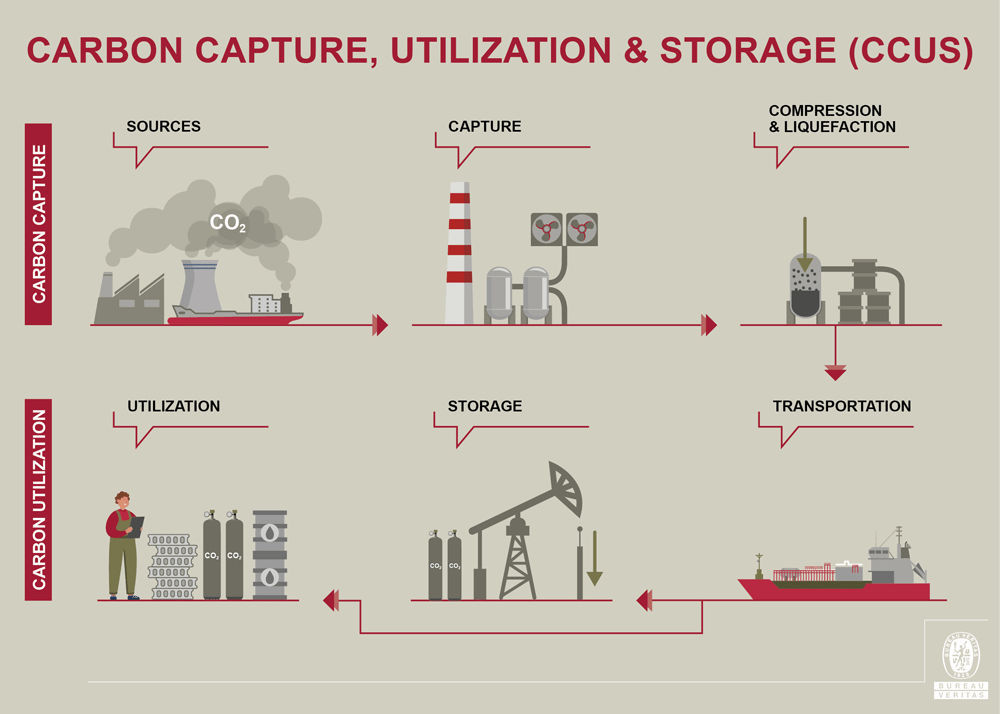
A diagram on how carbon is captured, and later stored or utilised
Source: marine-offshore.bureauveritas.com
Carbon capture itself is not a new concept—oil companies used carbon capture tech to filter CO2 produced from extraction processes. The CO2 then is pumped back down in order to retrieve oil easier, and in turn produces a feedback loop to extract oil. However, the first large-scale, integrated project of Carbon Capture and Storage is relatively recent, and first started in 1996. It is known as Sleipner in Norway, which was used to evade the 1991 Norwegian CO2 tax.
CCUS itself entails not only the capture of CO2 from fuel combustion or industrial operations and the transportation of this CO2 via ship or pipeline, but also either its use as a resource to manufacture valuable goods or services or its long-term storage under the earth's surface in geological formations (hence the term Utilisation and Storage). When the CO2 comes from bio-based processes (Bioenergy with Carbon Capture and Storage or BECCS) or straight from the atmosphere (Direct Air Capture or DAC), CCUS technologies also lay the groundwork for carbon removal or "negative emissions”. This tech is then termed negative emissions technology (NET).
The Case for CCUS & NET
Nearly 40% of all emissions connected to energy come from the power industry, which is the biggest carbon emitter. With a share of 38%, coal continues to be by far the most common fuel used to generate electricity. In 2021 coal based emissions accounted for 15.9 giga tonnes (Gt) of CO2, or 44% of total energy-related emission in 2021. Yearly emissions are also predicted to reach 6 GtCO2 in 2040 under the current government’s policies. Moreover, other industries which are key greenhouse gas emitters include cement production, with 3% of total emissions in 2018.
Meanwhile, the Intergovernmental Panel on Climate Change states that not only must industries reduce their rate of carbon emission, carbon must be sequestered or absorbed as well in order to prevent reaching 1.5°C. Hence, even with the mitigation of carbon emissions, carbon dioxide still needs to be absorbed from the air. If that is the case, why aren’t we focusing on trees as a “carbon capture tech” instead? In an article by Bonnie Wiring, it is stated that “But the fact is that there aren’t enough trees to offset society’s carbon emissions – and there never will be”. Trees would not be enough to absorb our current rate of emissions. In the path to a net zero world, we must look at multiple solutions.
What are current examples of CCUS & NET around the world?
The fuel transformation and industrial sectors currently have just under 30 commercial CCUS facilities in operation, with around 160 projects underway in 2021. In total, the CCUS mitigates or absorbs around 40 million tonnes of CO2 annually. Some notable projects include:
1. Sleipner (CCUS)
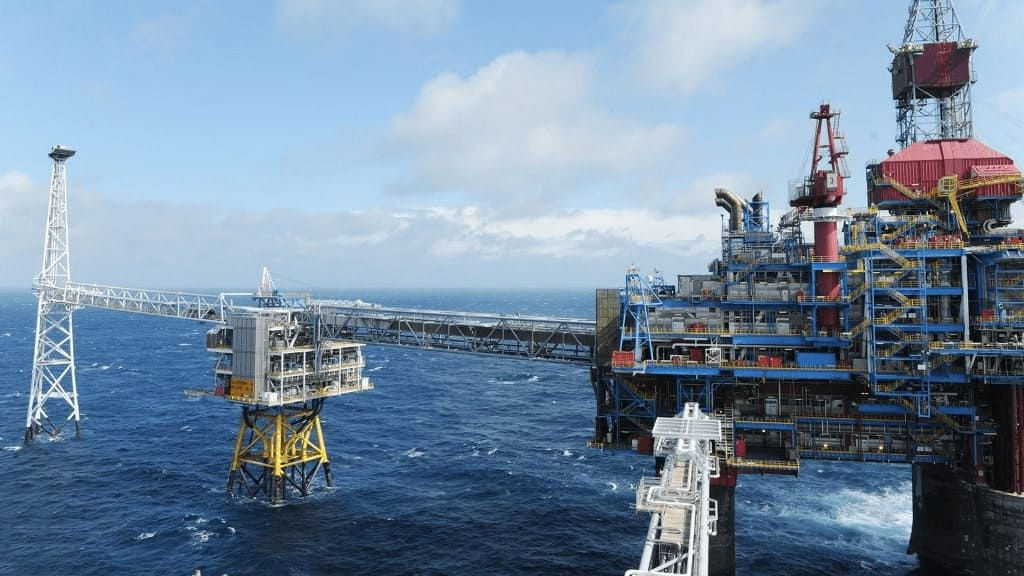
Cost/Ton CO2: $17 US
This 26 year-old project is a pioneer, being the first of its kind in the world. Natural gas collected by Sleipner from the reservoir contained 9% CO2, which is then filtered using amine scrubbers. Similar to how natural gas and oil have been held in these sorts of deep geological formations for millions of years, the injected CO2 will stay in the Utsira sandstone for thousands of years. As of 2016, Sleipner has stored 17 million tonnes of CO2.
2. Neustark (DAC)
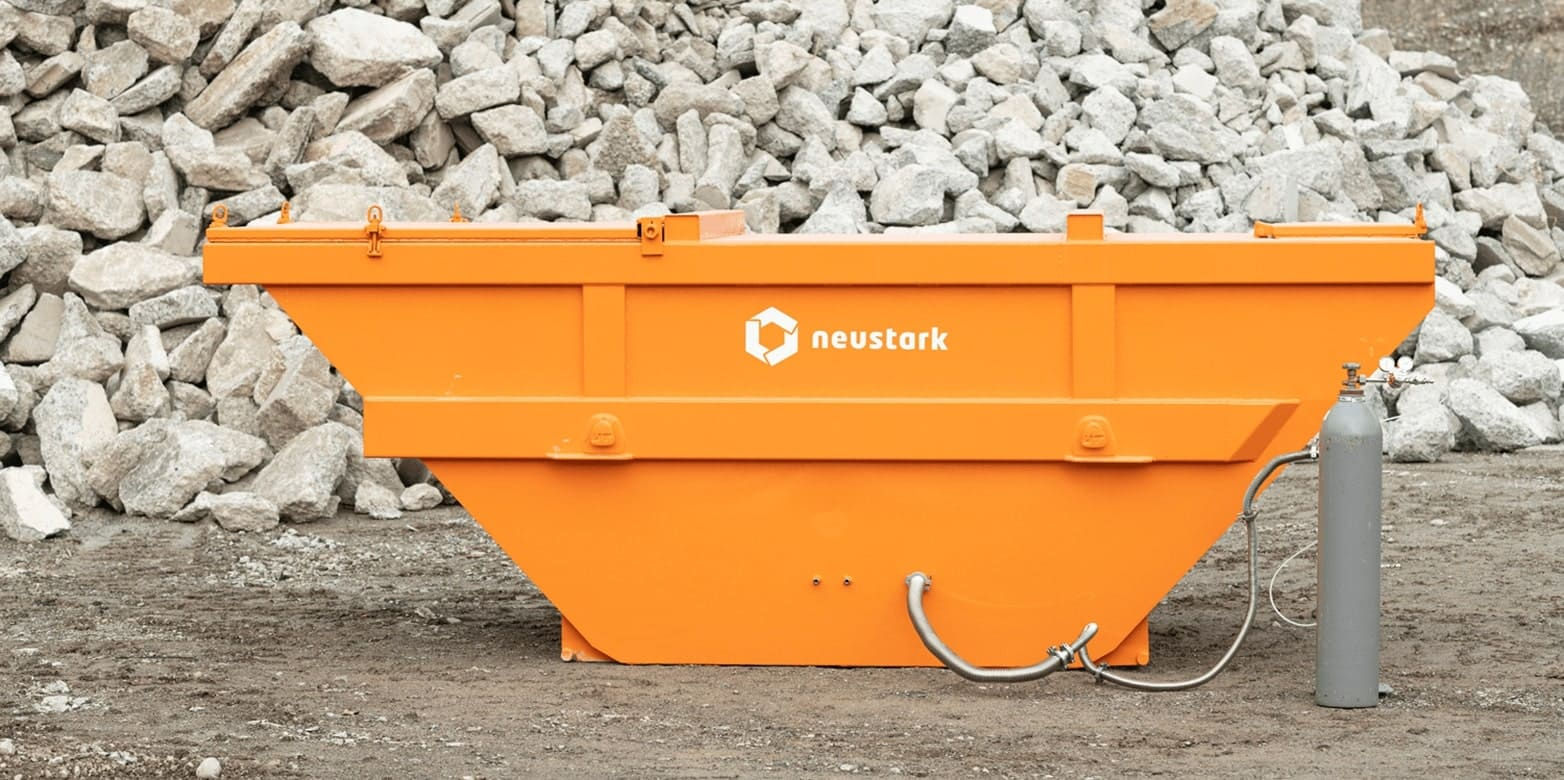
Cost/ Ton of CO2: N/A
Founded in 2020, Neustark is a Switzerland based company that innovates cement into a carbon capture technology. Neustark does so by removing CO2 from the atmosphere, permanently storing it in recycled concrete (yes, concrete can get recycled!) which then cuts new emissions by reducing the use of cement. Overall, this produces concrete which helps mitigate and absorb around 30kg of CO2/ m3, and reduces 10% of CO2 emission in contrast to normal production of cement.
3. Climeworks (DAC)
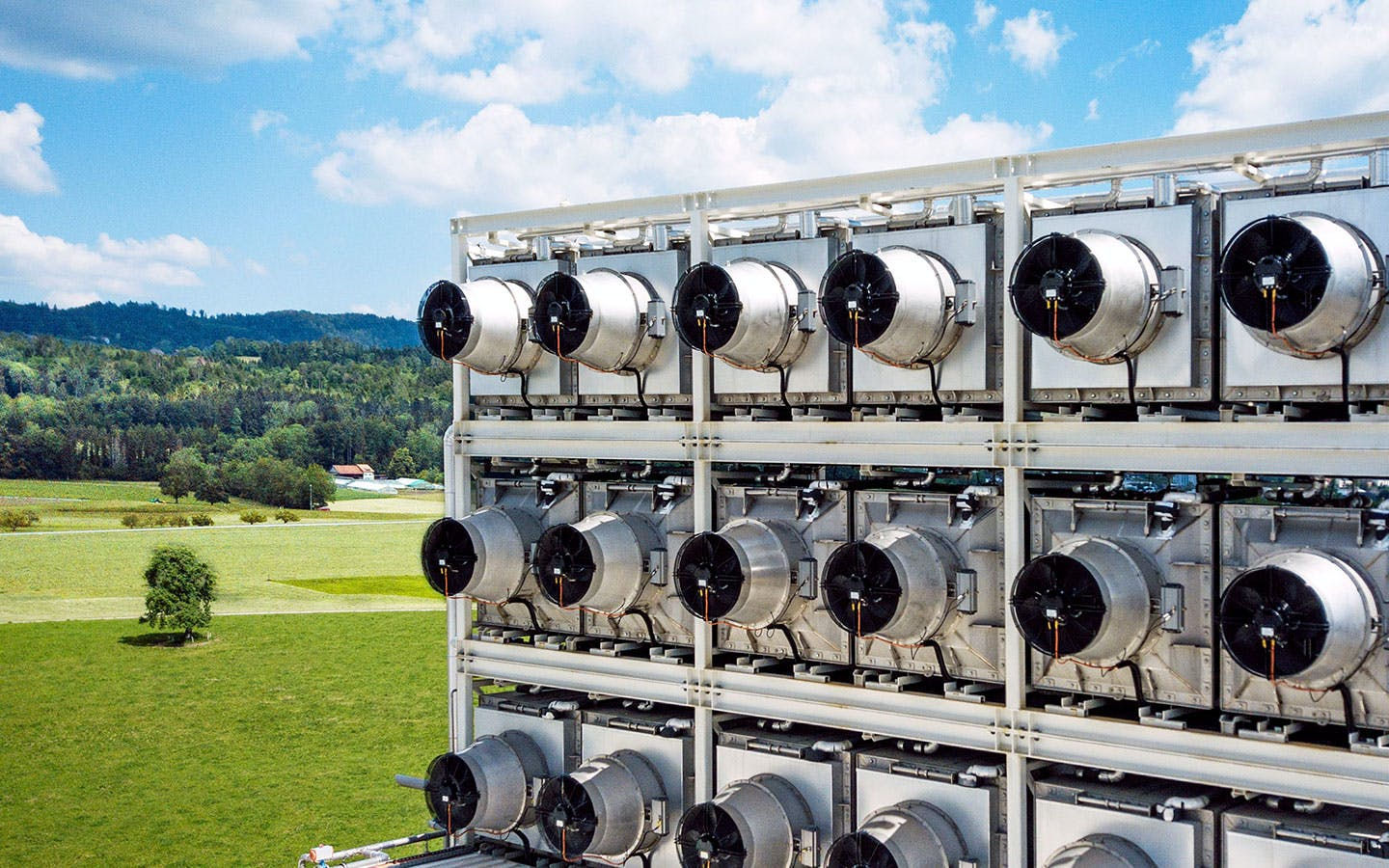
Cost/ Ton of CO2: $500
Launched in 2017, Climeworks is a Direct Air Capture facility that helps filter CO2 directly from the air, and stores it permanently underground or uses it for other purposes (such as for carbonated drinks). It relies on renewable energy to power its facilities, and those facilities are based in Switzerland and Iceland. Mammoth, its largest direct air capture and storage plant, has the capacity to capture 36,000 tonnes of CO2 per year.
4. Drax (BECCS)
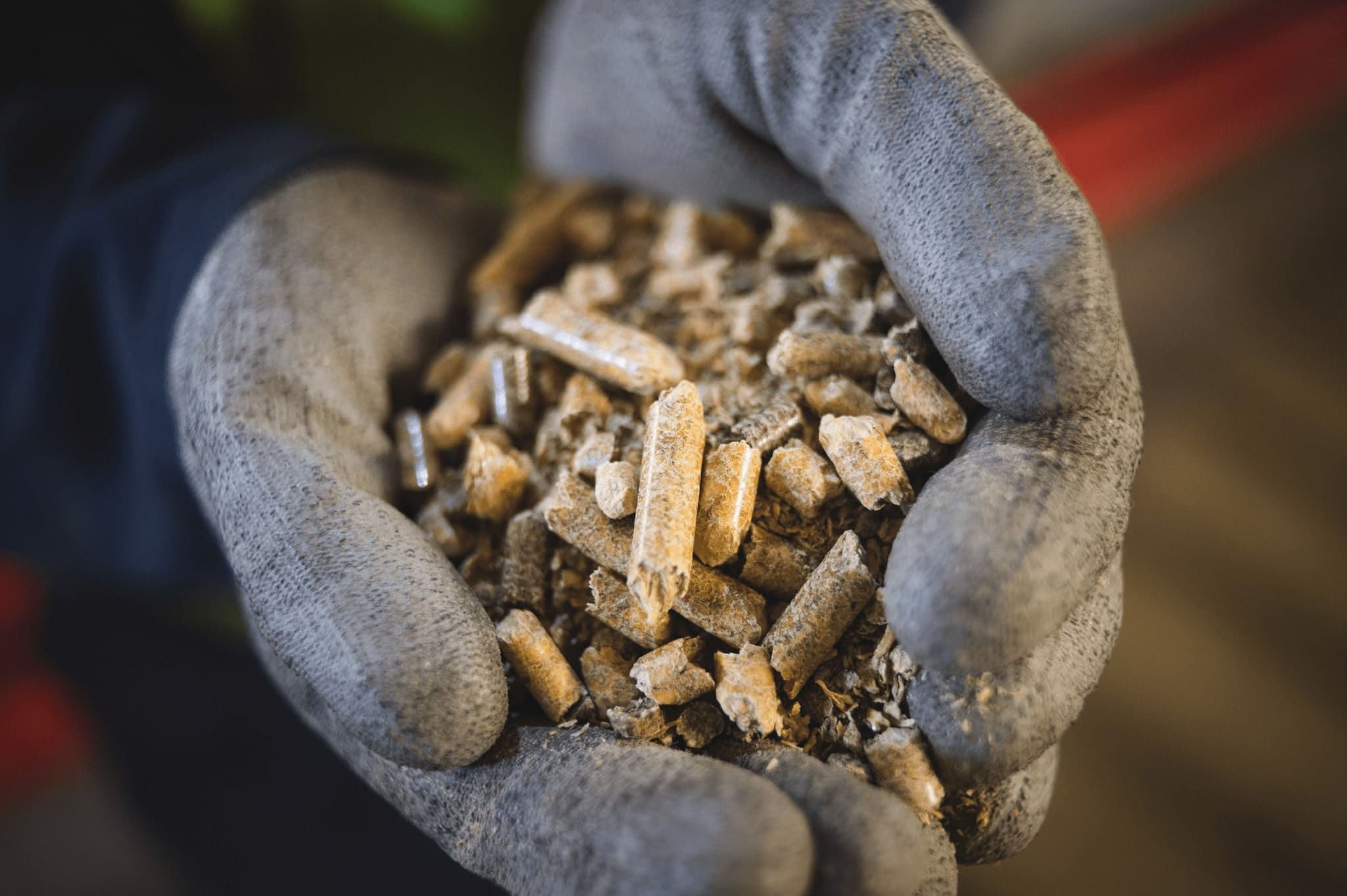
Cost/ Ton of CO2: $186 (for 1 MWh of electricity as well)
Drax generates renewable energy, produces sustainable biomass, and sells renewable electricity to companies. The company runs a worldwide bioenergy supply business, producing compressed wood pellets for its own usage as well as the needs of clients in Europe and Asia. Using Bioenergy with Carbon Capture and Storage (BECCS) technology to remove carbon dioxide from the atmosphere at scale while supplying dependable renewable power, the Drax Group announced in 2019 a world-leading intention to be carbon negative by 2030.
5. Cemvita Factory (DAC)
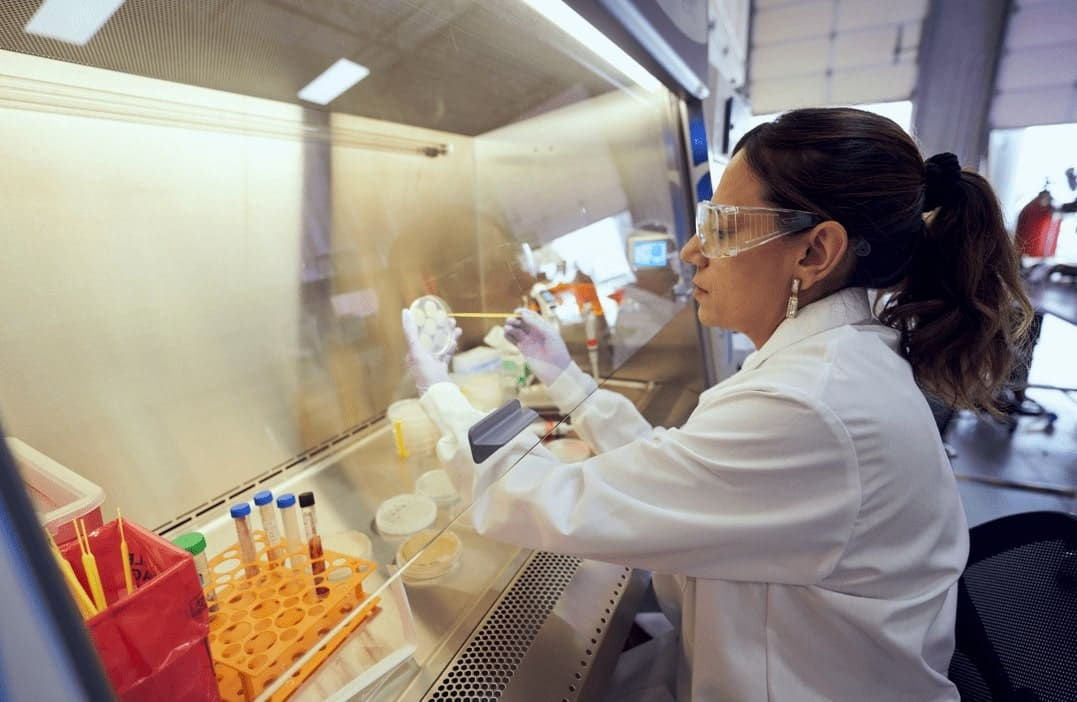
Cost/ Ton of CO2: N/A
Cemvita is an up and coming startup that developed genetically modified microbes in order for it to convert CO2 and water to bioethylene—a vital building block for various items in the petrochemical industry, such as lubricants and detergents. Although it is still a work in progress, it is estimated that its scale-up may absorb up to 1.7 mega tonnes of CO2/ year.
6. Prometheus Fuels (DAC)
Cost/ Ton of CO2 : $36
Prometheus Fuels is an ambitious startup that is currently developing the technology to obtain fuel based on CO2 captured from air. With the machines running on renewable energy, the reaction process converts CO2 and water to alcohols and oxygen. Thus, producing a “negative emissions” fuel, that in turn would produce a net zero emissions when used. It is estimated that in one Titan Fuel Forge (their machine which does the capture and conversion), 900 tonnes of CO2 can be converted into 100,000 gallons of diesel, jet fuel, or gasoline annually.
What About CCUS in Indonesia?
Fossil fuels have supplied about 90% of Southeast Asia's (SEA) energy demand since 2000, and the area is home to significant coal and liquefied natural gas exporters. According to IEA reports, at least seven possible projects in Southeast Asia, including those in Indonesia, Malaysia, Singapore, and Timor-Leste, have been identified and are in the early stages of development. Japan companies in partnership with PT Pertamina are investigating a project that could potentially store up to 300,000 tonnes of CO2/ year at the Gundih gas field in Central Java. Two projects in Indonesia involving enhanced gas recovery (EGR) are now being studied at Sukowati and Tangguh. In 2017, ITB university (with help from ADB Bank) built a research facility known as the Centre of Excellence for CCU and CCS.
The Carbon Capture momentum—an underwhelming progress?
Carbon capture tech seems like a silver bullet in order to fix climate change. But current CCUS has many shortcomings, which leaves many environmentalists sceptical. Although the interest in CCUS is increasing due to a more favourable investment environment and net zero targets, its deployment is still far behind what is needed to achieve net zero emissions by the year 2050.
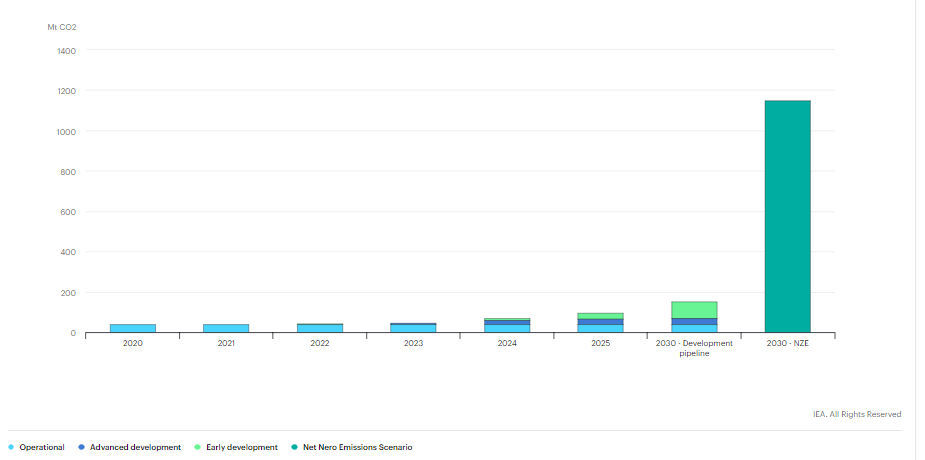
Graph of current CCUS developments in contrast with Net Zero Emissions Scenario in the year 2030
Source: IEA.org
Furthermore, current DAC tech is costly and expensive—Climeworks Orca plant in Switzerland costs around $600 to $1,000 per tonne of CO2 and is only able to offset 4000 tonnes of CO2/ year. Meanwhile, a round-trip from Singapore to New York emits as much as 5.8 tonnes of CO2 for one passenger. Alas, CCUS & NET tech is also one of the only solutions that fossil fuel industries can rely on for a business-as-usual scenario. Hence the great investments and strides that the fossil fuel industry is taking in making sure CCUS & DAC tech is viable in the future.
Conclusion
CCUS is an innovative solution in light of climate change’s multifaceted problem. CCUS reduces CO2 in the air by capturing the CO2 in the air or from industrial processes, transporting it, and then storing it underground or utilising it for other meaningful purposes. Meanwhile, DAC does so by absorbing CO2 directly from the atmosphere. CCUS & DAC tech is developing rapidly, with novel solutions from utilising CO2 such as net-zero fuel or a more environmentally friendly cement. Although the implications of CCUS & DAC tech seem bright and promising, some developing tech still remains unproven in their overall carbon emission/ reduction, and if not, it currently remains a costly way to offset carbon. All eyes are on CCUS & DAC tech, but whether or not it delivers what it promises remains to be seen.
Related Updates

02 November 2025 – Article
Seiring meningkatnya sorotan dari investor, regulator, dan masyarakat, Environmental, Social, and Governance (ESG) telah menjadi pilar utama kesuksesan korporasi yang berkelanjutan. Tata kelola ESG yang efektif membutuhkan kepemimpinan yang kuat, akuntabilitas yang jelas, dan keterlibatan pemangku kepentingan secara transparan. Dewan direksi dan eksekutif tidak hanya harus mengintegrasikan prinsip ESG ke dalam strategi, tetapi juga memastikan bahwa etika, kebijakan, dan pengambilan keputusan mencerminkan prioritas keberlanjutan.

02 November 2025 – Article
Dalam satu dekade terakhir, Environmental, Social, and Governance (ESG) telah bergeser dari isu khusus menjadi prioritas utama bagi perusahaan, investor, regulator, dan komunitas. ESG kini menjadi pusat bagaimana bisnis mengelola risiko, memanfaatkan peluang, dan membangun ketahanan jangka panjang.

02 November 2025 – Article
Dalam lanskap bisnis global yang terus berkembang, Environmental, Social, and Governance (ESG) telah menjadi faktor penentu kesuksesan korporasi. Melampaui kepatuhan, ESG mewakili ketangguhan, inovasi, dan akuntabilitas. Dewan direksi berada di pusat transformasi ini, mengarahkan strategi, memastikan transparansi, dan menjaga penciptaan nilai jangka panjang.

Institute for Sustainability and Agility (ISA) has participated as a Member of United Nations Global Impact (UNGC) since 2021